Uterine Fibroid Treatment in Bangalore, Without Hysterectomy
Heavy periods, pelvic pain or pressure? Fibroid embolisation is a non-surgical, day-care option that shrinks fibroids by blocking their blood supply, while preserving your uterus.
Vascular Specialist
Yelahanka
Who this is for
You should consider an interventional radiology consultation if:
You were advised surgery
and want to explore non-surgical options.
You worry about recovery
long downtime, scars, or complications.
Medicines are no longer helping
symptoms keep returning or getting worse.
You want a second opinion
before deciding on a hysterectomy.
UTERINE FIBROIDS
Common concern:Fibroid embolisation shrinks fibroids by blocking their blood supply while preserving the uterus.
What patients value:Symptoms we commonly treat
- Heavy or prolonged periods
- Pelvic pain or pressure
- Frequent urination or bloating
- Pain during intercourse
- Anaemia caused by blood loss
Manipal Hospital Yelahanka
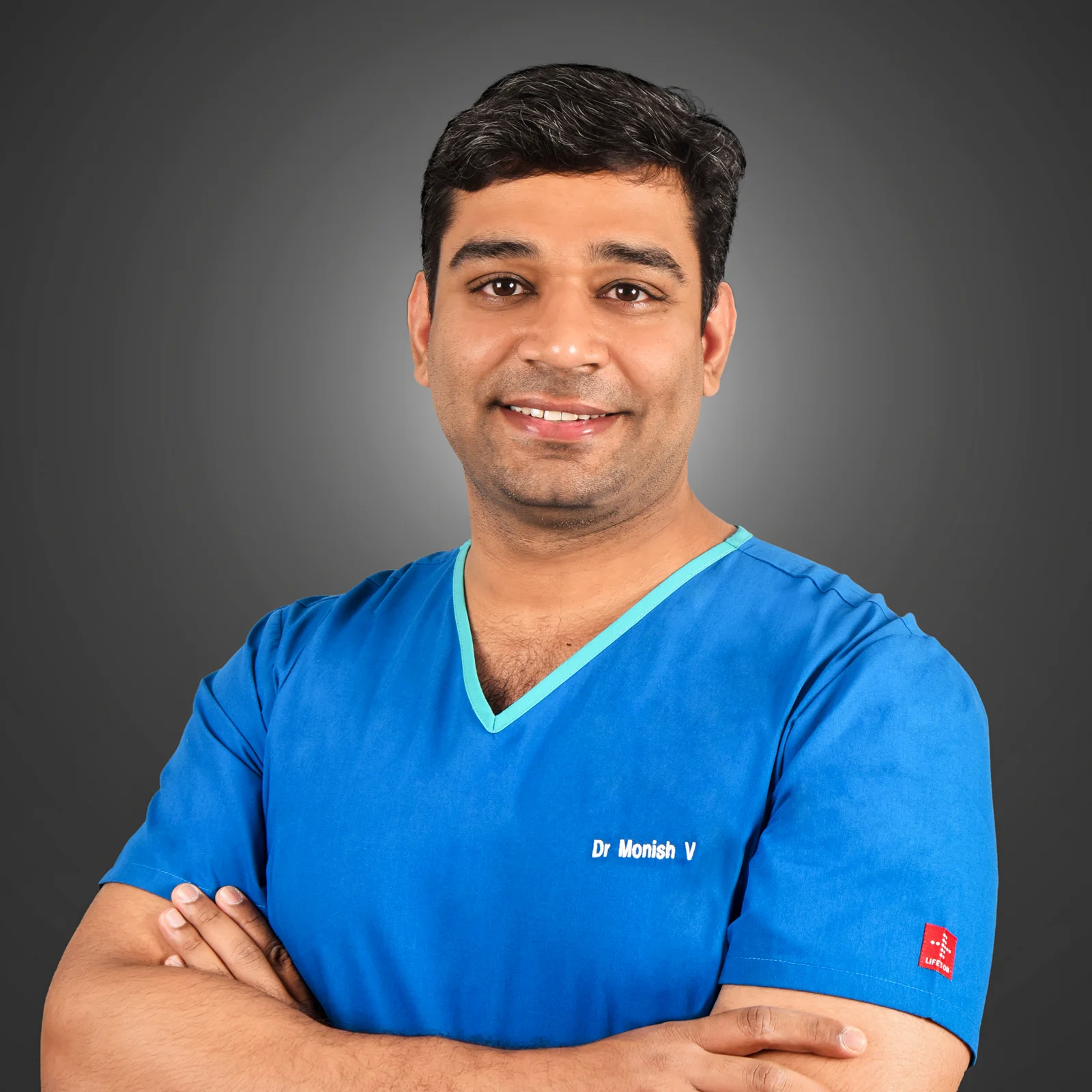
Meet Dr. Monish V
A Vascular Interventional Radiologist at Yelahanka, Bengaluru
Dr. Monish V is a Vascular Surgeon at Manipal Hospital Yelahanka and Venuva Vascular Centre, Malleshwaram, with over a decade of experience in minimally invasive, image-guided treatments. He helps patients avoid major surgery by offering proven non-surgical and catheter-based solutions wherever possible.
His clinical focus includes conditions such as varicose veins, varicocele, uterine fibroids, thyroid nodules, enlarged prostate, blocked leg arteries, and selected cases of deep vein thrombosis. Most procedures are performed as day-care treatments with faster recovery, minimal discomfort, and no surgical scars.
Dr. Monish has been published in reputed national and international journals and has presented his work at leading interventional radiology conferences. He is actively involved in advancing evidence-based, minimally invasive care.
His philosophy is simple.
Explain options clearly.
Choose the safest effective treatment.
Recommend surgery only when it is truly necessary.
Uterine Fibroid Treatment Options in Bangalore
The right choice depends on your symptoms, the size and position of the fibroids, and whether you plan a pregnancy.
Fibroid embolisation (UFE)
A catheter-based procedure that blocks the blood supply to fibroids so they shrink. No cuts, no stitches, and the uterus is preserved.
Medicines
Hormonal and other medicines can control heavy bleeding and pain for some women. They may not shrink fibroids lasting, and symptoms can return.
Myomectomy
Surgery that removes the fibroids and keeps the uterus. It is done by hysteroscopy, laparoscopy or open surgery, depending on the fibroids.
Hysterectomy
Surgical removal of the uterus. It ends fibroid problems for good but is major surgery, and is usually a last option.
Who Should Consider a Consultation?
If any of this sounds familiar, a scan review with Dr. Monish can tell you which options are open to you.
You may benefit if you have
- Heavy or prolonged periods
- Pelvic pain, pressure or a feeling of heaviness
- Frequent urination, constipation or bloating
- Anaemia from ongoing blood loss
- Fibroids that medicines no longer control
- Advice for a hysterectomy or myomectomy, and want to explore alternatives
- A wish to keep your uterus and recover faster
It may not be suitable if
- You are pregnant or planning a pregnancy soon
- You have an active pelvic infection
- Your scan raises any concern other than a fibroid
Suitability is decided only after your scans and history are reviewed. If embolisation is not right for you, you will be told so and guided to the safest alternative.
How Does Uterine Fibroid Treatment Work?
Fibroid embolisation is an image-guided procedure done through a small puncture, not an incision.
EvaluationDr. Monish reviews your symptoms and your ultrasound or MRI to confirm the fibroids and check that embolisation suits you.
The procedureUnder imaging guidance, a thin catheter is passed through a tiny puncture in the wrist or groin to the arteries feeding the fibroids. Tiny particles are released to block that blood supply.
RecoveryMost patients stay a short time in hospital. Cramping after the procedure is common and is managed with medicines. Many return to routine within days to a couple of weeks.
Follow-upFibroids shrink gradually, and bleeding and pain usually ease over the following weeks to months. A follow-up scan checks your progress.
Frequently Asked Questions
Straight answers to what patients ask us most.
Is fibroid embolisation a surgery?
No. It is a minimally invasive procedure done through a small puncture in the wrist or groin. There are no cuts on the abdomen and no stitches.
Will I lose my uterus?
No. The aim is to treat the fibroids while keeping your uterus in place.
Is the procedure painful?
The puncture site is numbed, and you are given medicines for comfort. Cramping in the first day or two is common and is controlled with pain relief.
How long will I stay in hospital?
Most patients stay for a short period, often a day. Dr. Monish will tell you what to expect for your case.
How soon will my symptoms improve?
Many women notice lighter periods and less pain within a few cycles. Fibroids keep shrinking over several months.
Can fibroids come back?
The fibroids that are treated are not expected to regrow, but new fibroids can develop over time. Follow-up scans help catch this early.
Can I get pregnant after the treatment?
Pregnancies have been reported after embolisation, but if you plan to have children, tell the doctor at your first visit. Another option, such as myomectomy, may suit you better.
What does the treatment cost, and is it covered by insurance?
Cost depends on your scans and the hospital plan, and insurance cover differs between insurers. Call +91 9916171616 and our team will guide you.
Contact
Call
Visit
Manipal Hospital, Sy 23/3, hobli, Venkatala Village, Maruthi Nagar, Yelahanka, Bengaluru, Karnataka 560064